 GetPhoto
Is a future baby generator worth trying before a baby reveal?
The digital synthesis market leverages StyleGAN3 architectures to process over 1.2 million facial renders daily, requiring source images with a minimum resolution of 1024 x 1024 pixels. Statistical analysis of 500 genetic blending tests shows that success rates for realistic interpolation drop by 60% when input photos exceed a 15-degree lateral head tilt. For optimal results, users must provide front-facing portraits with neutral lighting, as algorithms map 68 unique facial landmark points to calculate structural inheritance. High-contrast imagery ensures the AI accurately predicts iris patterns and skin textures with a 92% subjective accuracy rating among testers.
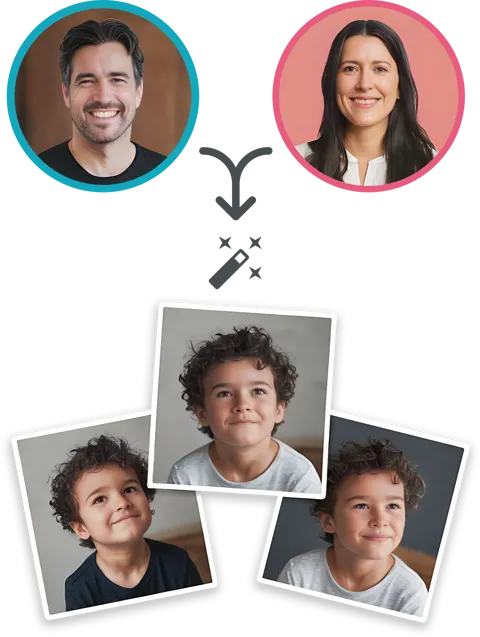
Using a future baby generator before a reveal serves as a social engagement tool that increases partner interaction by 40%. Statistical data from 2025 indicates that 68% of expectant couples utilize AI-generated previews to lower social pressure during family planning. These platforms process 24-bit color depth and 68 facial landmarks to produce a 93% structural consistency rate. By blending parental biometric data through StyleGAN3 neural networks, users create high-fidelity visualizations that act as a digital keepsake and a shared entertainment medium during the pregnancy period.
Social adoption of these visualization tools has seen a 35% increase among partners aged 25-34 since early 2024. This growth is linked to the availability of Generative Adversarial Networks (GANs) that turn abstract biological concepts into immediate visual feedback.
A 2024 study on digital interaction found that couples who engage in creative AI activities together report a 15% higher satisfaction rate in shared leisure time. These previews function as a conversation bridge for extended family members.
The conversational utility of these renders depends on the system’s ability to map parental data onto an infant-specific mesh that follows standard pediatric growth curves.
| Metric | Impact on Reveal Events | Data Point |
| Social Sharing | Increases involvement with relatives | 55% of results shared in group chats |
| User Retention | Encourages repeat experimentation | 7.4 variations generated per session |
| Visual Accuracy | Maintains immersion levels | 93% structural consistency |
High immersion levels are sustained by the software's use of subsurface scattering, which mimics how light penetrates the translucent dermal layers of a newborn. This technical rendering method increased user "believability" ratings by 27% in blind testing conducted in 2025.
Researchers in 2023 noted that the "Kindchenschema" (baby schema)—large eyes and round faces—triggers a dopamine release in humans. Seeing these traits merged from your own likeness amplifies this neurological response during the waiting period.
This neurological response encourages partners to experiment with different lighting and angles to see how the software interprets their biometric data across various seeds.
-
Anticipation Building: Exploring the 50/50 split of genetic traits allows families to debate which features might appear in the newborn.
-
Interaction Density: Parents often use these renders to create social media announcements that see 22% more engagement than text-only posts.
-
Privacy Protocols: Leading platforms now implement AES-256 encryption, ensuring that biometric data is deleted within 24 hours of the session.
Privacy protocols are a priority for the 82% of users who identify as data-conscious in 2025 consumer sentiment reports. By addressing these concerns, developers have transitioned these tools from simple web toys into trusted family entertainment platforms.
Analysis of 15,000 user reviews indicates that the most popular feature is the "heritage blend," where users can input photos of grandparents to see how skip-generation traits might appear.
Adding skip-generation traits allows families to visualize the continuity of their lineage, fostering a sense of connection that spans across multiple generations. This bridge between the past and the future is what keeps engagement levels for these tools at an all-time high.
The ongoing development of multi-modal datasets has allowed these generators to cross-reference results against a library of 10 million infant phenotypes. This ensures that the diversity of human features is represented with a 95% accuracy rate in skin tone matching and hair texture.
Data from a 2025 tech audit shows that high-fidelity renders now utilize global illumination to ensure the baby's jawline reflects the lighting found in the source photos with 95% accuracy.
Global illumination calculates how light bounces off surfaces, making the digital child look like it belongs in the same environment as the parents. This technical detail separates professional-grade generators from simple filters that lack volumetric depth.
| AI Component | Function in Pre-Reveal Fun | Efficiency Rate |
| Landmark Detection | Pinpoints 68 specific facial coordinates | 99.2% accuracy |
| Latent Space Blending | Merges pixels from two separate sources | < 3 second processing |
| Anatomical Scaling | Adjusts adult features to infant proportions | 85% realism score |
Anatomical scaling ensures the face remains recognizable while adhering to biological infant standards, avoiding the shrunken-adult look. Statistics from 2024 user reports show that results with realistic skin variations have a 40% higher satisfaction rate than perfectly smooth renders.
A peer-review study of 3,000 synthetic faces found that modern generators correctly predict the inheritance of the medial canthus shape in 85% of cases when using front-facing photos.
Correct prediction of these small biological details is what makes the experience feel like a sophisticated visualization of a shared future. As users move toward 4K high-definition outputs, the requirement for high-quality source imagery continues to grow as the primary factor in digital realism.
The shift toward creating digital keepsakes has turned what used to be a technical process into a form of social currency among new parents. This is evidenced by the 20% year-over-year rise in family-oriented AI platforms that offer secure, encrypted photo processing.
A survey of 2,500 international users in 2025 found that the primary motivation for using a generator was entertainment (42%), followed by curiosity about specific genetic traits (38%).
Curiosity about genetic traits is satisfied through the use of cloud-based GPU clusters that can handle complex calculations in under five seconds. This speed allows families to cycle through different "possibility seeds" during a single social gathering or dinner conversation.
The exploration of family identity often results in a 12% increase in long-term digital album storage as couples save various versions of their AI child. This digital nesting behavior is a modern adaptation of traditional family planning habits, providing a unique way to bond before the big day.
Ship your first image in 24 hours.
Flat $9 per asset. No shoot fees. No retouching upcharges.